BBC asks if Apple is ‘winning too often’ as it fights Samsung over ripping off the iPad

Slightly odd article from the BBC, with Rory Cellan-Jones asking if Apple is now winning too often in the tech industry. It’s safe to say Apple’s doing rather well of late, but it’s easy to forget that it is a marginal player in desktop and notebook computers (even if its savvy business methods ensure high profitability) and has a scrap on its hands regarding smartphones; only in tablets does Apple look to have an iPod-style lead as its rivals flounder and find it nigh-on impossible to beat so-called ‘rip-off Apple’ on pricing.

Nonetheless, Cellan-Jones asks if Apple’s success is now destroying the industry. He notes Google’s patent land-grab and suggests Apple won’t be worried about that; he mentions HP’s tablet fire-sale and PC spin-off, and offers this:

Apple executives – like the England cricket team – must be asking themselves “where did it all go so right?”

Strange quote there. It’s not like success has come as a surprise to Apple in the spaces it’s doing well in.

It’s only 18 months since Steve Jobs told us that the iPad was part of a revolution that would take us beyond the PC – and now HP is not only agreeing, it’s throwing in the towel.

In particular, the axing of its Touchpad tablet computer, just weeks after a hugely hyped launch, is not only a humiliating and expensive setback for HP, it threatens to sap the confidence of consumers in all rivals to Apple’s device.

I’m not sure most casual buyers will distinguish between WebOS or Blackberry or Android tablets, seeing them all as just potential iPad alternatives.

This neatly sums up the problem with Apple’s rivals—they don’t offer anything new. None of Apple’s rivals has sought to be like Apple and be truly disruptive. With the iPad, Apple didn’t look at what existed and rip off the leading product; instead, it created an entirely new market.

So if a product like the Touchpad can die within weeks who’s going to want to invest in any of the other iPad killers?

Here’s where Cellan-Jones starts to slide into the gravel trap. No-one has yet invested in any kind of ‘iPad killer’, because no-one has done anything other than look at Apple’s product and try to create some kind of facsimile. Every tablet on the market right now tries as much as possible to look like an iPad and then offers some feature or other that Apple deemed unnecessary in the tablet space. Thus, you have the ‘iPad with Flash’ and the ‘iPad with a USB port’; what you don’t have is any real innovation, nor anything that will do to the iPad what the iPad did to desktop and notebook computing.

In short: you don’t create an iPad killer by ripping off the iPad; you create an iPad killer by doing something totally amazing that Apple itself hasn’t thought of yet but that makes the iPad look as archaic as the iPad made most notebooks look.

Cellan-Jones then says the one tablet that could give the iPad a scrap is the Samsung Galaxy Tab 10.1, but there’s a problem:

Apple is in the middle of a legal battle in a German court over the alleged similarities between the Tab and the iPad, which saw Samsung’s device temporarily banned from most European countries.

The ban has been lifted, outside Germany at least, but the whole affair has not helped market the tablet.

Who will go out and buy an iPad rival if all they are hearing is that it’s a copy of the original, and no cheaper?

Well, quite. And here’s the thing: it more or less is a copy of the original, and no cheaper.

Whatever the merits of Apple’s case may be, patent and intellectual property disputes now appear to be harming the interests of consumers and innovators in the computing industry.

SCREEEEE! THUNK! And there’s Cellan-Jones, in the wall, with a crumpled bumper. I fail to see how Apple is harming the interests of consumers by blocking a device that wholeheartedly ripped it off, allegedly to the point of intentional confusion. As for harming the interests of innovators… really? Let’s take a look at that, courtesy of SockRolid at MacRumors:

Tablet comparison

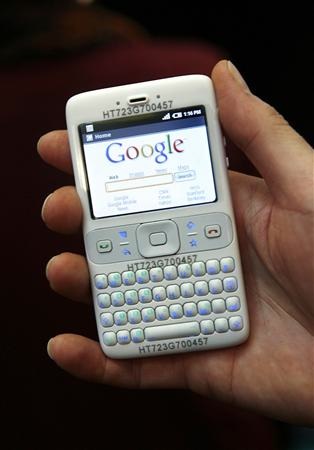
Yeah, just feel the innovation. (Additional handy images: Daring Fireball’s shot of a pre-iPhone Android device, which didn’t at all look like a BlackBerry, and @Dooderoo’s ‘before and after’ of Samsung tablets.)
Steve Jobs and his company have enjoyed win after win over the last couple of years.

But many consumers – as well as rivals – may be hoping that on Thursday when the German court rules again on the copycat case, Apple suffers a rare defeat.

Not me. I’m sick of companies just riffing off other companies and it needs to stop. Microsoft of all companies has shown that you can innovate in the touchscreen space (although, sadly, Ballmer’s ‘Windows everywhere’ idiocy has stopped Windows Phone already appearing on tablet devices; instead, we’re told to wait for the Frankenstein’s monster that will be Windows 8—neither optimised touchscreen environment nor traditional desktop computing OS, despite trying to be both).

I don’t believe the Apple device designs were ‘obvious’, otherwise someone else would have got there around the same time, not many months later; and I also believe that if you’re going to copy rather than innovate, you’ve only yourself to blame if you, like Samsung, go as far as to rip off the bloody icons of your rival’s system.

August 22, 2011. Read more in: Apple, News, Opinions, Technology

Comments Off on BBC asks if Apple is ‘winning too often’ as it fights Samsung over ripping off the iPad

Shows how much I know: HP kills the TouchPad

Earlier today (well, technically yesterday, since it’s gone midnight here), I said HP should stick it out alone, create great hardware and software, not licence webOS  and attempt to out-Apple Apple. Turns out HP doesn’t have the stomach for that; instead, it’s killing the TouchPad and, judging by the other changes to its business, is instead going to attempt to out-IBM IBM. Yeah, good luck with that—I hear IBM has quite a head start.

Still, Apple had a head start, too, but then most people who’d used webOS thought HP could nonetheless make a mark. On Twitter, Lukas Mathis said:

Tablets will make up a huge part of the future PC market. HP had one of the best horses in that race. This will be known as HP’s worst move.

It’s certainly bad for HP, regardless of where it goes next; James Kendrick says why:

HP in one day tanked any trust it had built up with customers for years. I wouldn’t even buy a printer cartridge from them now.

I’m sure James won’t be the only one. And yoinking an entire platform that’s barely bedded in? Eddie Smith has some wise words on that:

The indirect message sent by HP today: If you buy a non-iPad, you might be buying abandonware.

I was hoping for more of a fight from HP. And with Microsoft nowhere, maybe commentators claiming we’ll eventually end up in an Mac OS/Windows-style result in tablets, but with Google’s Android in place of Microsoft, aren’t quite so far off—although the numbers and balance, clearly, won’t be terribly similar, unless Apple makes the iPad 3 out of papier mache and twigs.

August 18, 2011. Read more in: Apple, News, Opinions, Technology

4 Comments

These are not your father’s games: freemium on the iOS App Store

With most media, there comes a time when people kind of stop dead, refusing to consider anything past a certain point ‘proper’. This is particularly common in music, where every generation loves the music it grows up with and then, once adult, considers contemporary music inane, tuneless drivel.

Videogaming’s much younger than music, but similar issues are becoming commonplace. I once thought I’d already hit one such bump, with the move to seemingly enforced 3D during the era of the PSX, although I’d argue that wasn’t just my then-nostalgic inclinations, but also the argument by game developers that everything had to be in 3D—an idea handhelds like the GBA, DS and iOS devices have since consigned to oblivion. However, I’ve now definitely hit one ‘I don’t get it’ bump, and I’m not alone.

Citing a Flurry report that claims a stunning 68 per cent of iOS game revenue is now from ‘consumable’ rather than ‘durable’ purchases, Ben Brooks says:

This is astonishing to me and being that I am not in the group that plays these types of games, I just can’t see the motivation to buy in-app currency to use — especially knowing that I will have to buy it again at some point.

Again, no judgment — I just don’t “get” it.

Same here. I get sequels and unlockable content. I get ‘demo’ freemium games where you play a few levels and then pay for the rest. But I don’t get the appeal of grind-oriented games were you pay for currency to spend on things, run out of virtual cash, and then pay for more currency to spend on things. It’s not about challenge or skill—it’s about how deep your pockets are. It’s the videogaming equivalent of bling, and I don’t understand the appeal at all.

August 17, 2011. Read more in: Apple, Gaming, iOS gaming, News, Opinions

4 Comments

Dear tech world: the iPad 3 has not been delayed, because it hasn’t been announced

What’s that, every tech blog on the internet? The iPad 3 has been delayed, possibly due to “Retina display issues”? Would this be the iPad 3 that Apple hasn’t bloody announced yet, let alone offered a release date for? The one that DigiTimes and other papers with an accuracy rate just shy of a golfer using a loaf of bread instead of clubs said would arrive in September? Or maybe November? Or maybe whatever month they hit on their calendar with a dartboard, to get you to report on their story that carries no weight whatsobloodyever?

How about the iPad 4? Has that been delayed too? What about the iPhone 7? The only thing that’s been delayed is the tech industry’s return to common sense and reporting on news rather than rumours.

August 16, 2011. Read more in: Apple, News, Opinions, Technology

Comments Off on Dear tech world: the iPad 3 has not been delayed, because it hasn’t been announced

All hail Googorola! Google buys Motorola Mobility, offering the potential of Apple-like Android ecosystem

From the Google Blog and other sources, Google is to buy Motorola Mobility for $12.5bn. Naturally, Larry Page’s note bangs on about how great Motorola is and how terribly unfair everyone’s being regarding so-called “anti-competitive patent attacks on Android”, along with, laughably, saying the “acquisition will not change our commitment to run Android as an open platform”.

Like hell.

Google has already been tightening its Android ship and this will further continue to do that. At best for Googorola’s competitors, they’re now going to be competing against a company that has the potential to produce something Apple-like in its integration of hardware and software. Bar the low-end market (unless Googorola goes for that too), they’re screwed if the new superteam gets that right.

But I think this acquisition is good news for everyone aside from existing Android vendors. It should ensure better Android devices in the future and also give Apple a kick up the bum regarding improving iOS and iOS devices. It’s also further vindication that Apple’s got the business model right: control the hardware and the software and you create a better user experience. HP gets this. Google now, seemingly, is starting to understand this. All we need now is another big press release that Microsoft has bought or merged with Nokia and we can look forward to a hugely entertaining scrap as the smartphone and tablet vendors aim to better each-other.

Update: Note, of course, that this could also be a patents land-grab, which would be a massively missed opportunity for Google. I’m being more optimistic than that, though. I think Google’s starting to understand that its ‘open’ system is merely open to being screwed up by vendors, and so it wants to put a stop to that. If not, that shows a stunning lack of vision. However, quotes by Android partners saying they are behind the deal mean nothing. Their businesses largely rest (at present) on Android’s success, so they were hardly going to respond with “screw you, Google”, although there is also some truth in this acquisition potentially safeguarding Google and Android to some extent against the Apple/Microsoft patent threat.

August 15, 2011. Read more in: Apple, News, Opinions, Technology

3 Comments

« older postsnewer posts »