Weeknote: 22 June 2025 – Sega killing games, Apple does good, AI does bad, password advice, Trump’s stupid phone and British weather

Sega Forever graveyard

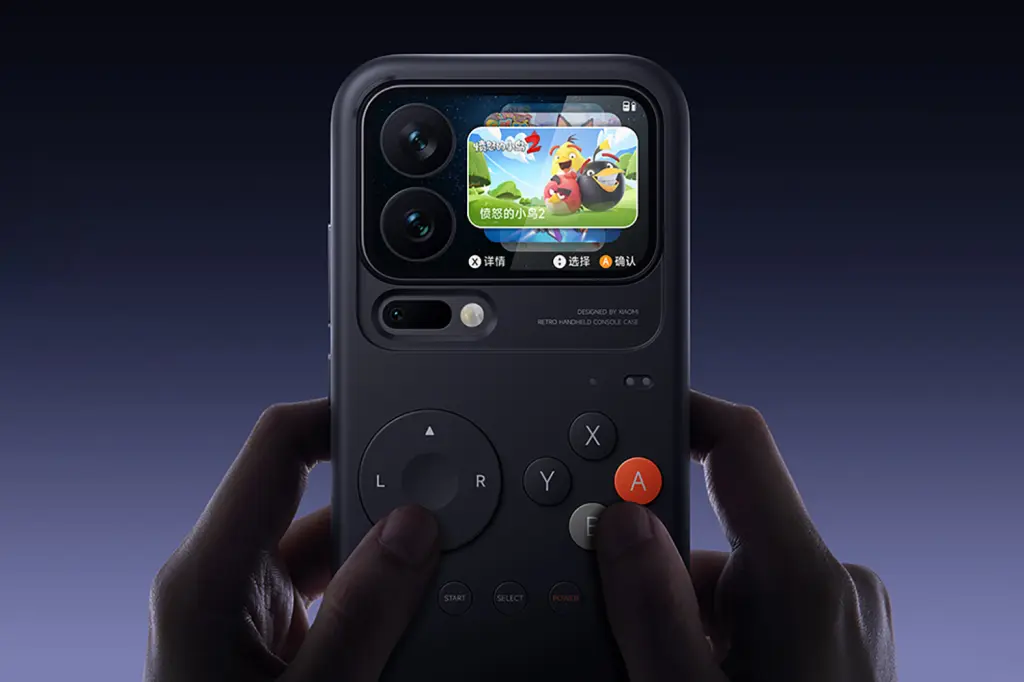
Sega killed loads of mobile games. You can save them. But, as I write for Stuff, you shouldn’t have to. This piece looks at how Sega Forever became ‘Sega For About Eight Years’, the ephemeral nature of digital games, and how (and why) the industry should embrace emulation. 

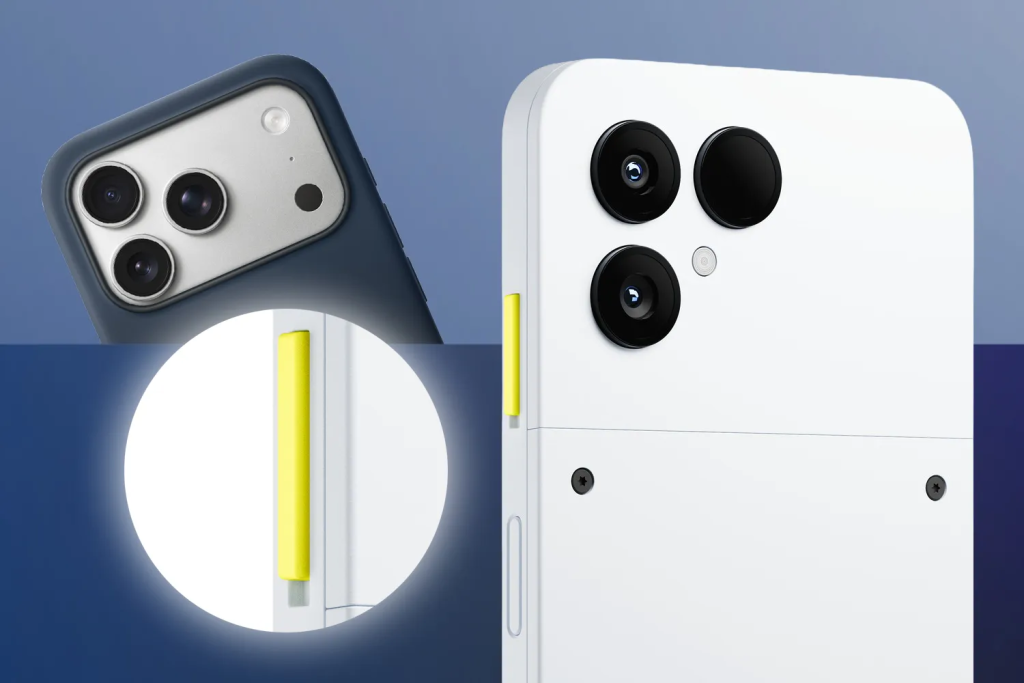
5 reasons to buy the Trump Mobile T1 Phone 8002 (gold version) was my second column for Stuff this week. Long-time readers might imagine it’s not entirely serious. Indeed, it suggests “[…] millions of idiots will buy one. Are you one of them?” Natch, I got angry ‘fan mail’ from someone who I imagine owns a red cap with MAGA written on it.

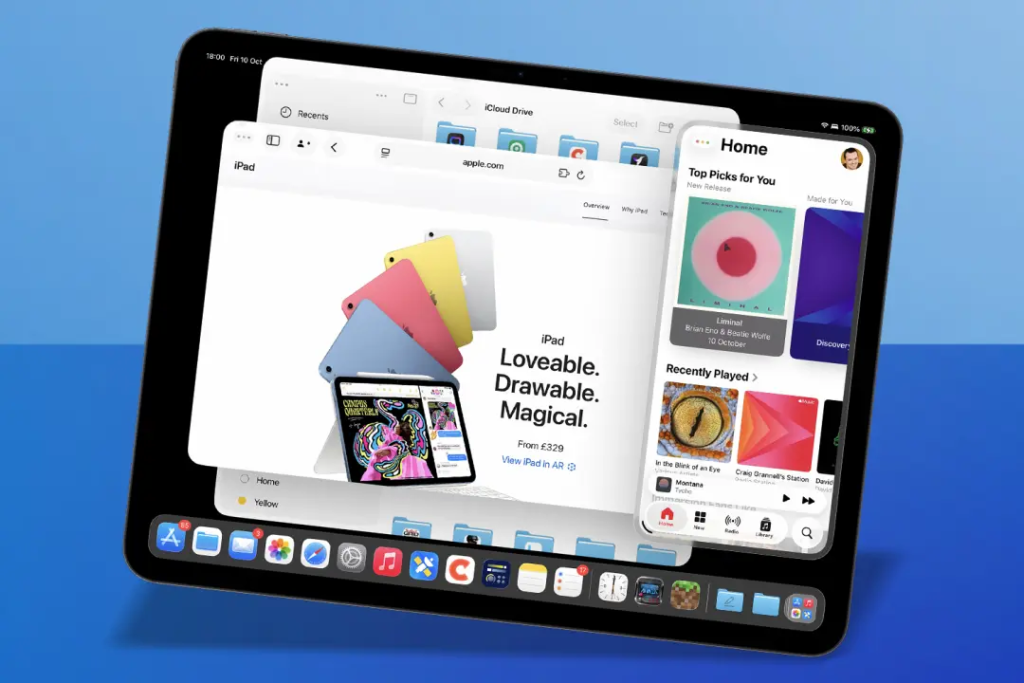
The new Spotlight for Mac is amazing – and I want it on my iPad. I’ve long been a fan of ‘pro’ launchers like the original Quicksilver. I write that I’m glad Apple’s getting in on the act – but would love the new Spotlight on iPad too.

Apple Intelligence live translation in iOS 26 is AI done right. Lest anyone think I only moan about Apple, here’s a second positive Apple article in one week. The heat must be getting to me. There are caveats with translation, but for personal use I’m excited about more people being able to communicate. This strikes me as a good use of AI.

But AI is mostly still terrible. This past week, WhatsApp gave someone another user’s number, AI-gen music on Deezer is being consumed by AI bots to make people money, and ChatGPT is offering to tailor translated articles for submission to specific magazines. That last one’s like Inception-level rights infringement – and equally terrible for editors and newcomers looking to break into journalism. 

Password advice remains terrible. You may have read Cybernews and others reporting on a massive hack. The snag: few concrete details are in the wild and yet publications reported this with clickbait headings and terrible advice. A commonality on the latter was ‘experts’ telling people to regularly update passwords. Genuine expert Kate Bevan said on Bluesky, “Actual experts say you shouldn’t change passwords unless you think they’ve been compromised. Also, SMS is better than no 2FA, but it’s the weakest method of 2FA: use an app to generate codes.” She uses Authy. Other options include Google Authenticator, Microsoft Authenticator, and Apple Passwords. Additionally, she points to the NCSC’s guidance from 2018 on why you shouldn’t regularly change passwords. Publications need to do better when giving advice on this subject.

I wrote about why it feels hotter in a UK summer than you might think. Unsurprisingly, quite a few people countered that by saying that, actually, where they live, 31°C is like being in a fridge, having not read the piece. Sigh. (I also just checked local humidity readings. For the past week, they bottomed out in the mid-50s and mostly lurked in the mid-80s or higher. Bleh.)

Bluesky is still dying. According to a Spectator columnist, who then adds: “Which is a shame, because I don’t want these people back on Twitter”. Reader, these people do want us all back. To save you a click, this is another piece by someone who doesn’t like Bluesky and didn’t bother to integrate. Increasingly, I hear people countering this narrative, saying that Bluesky is great for engagement and traffic. (Wired said much the same in its most recent print issue.) The Spectator piece does have one important point, though: if the decline in users becomes an ongoing trend, Bluesky might be in trouble. Mastodon might be fine as a quieter, niche online space, but it strikes me that for Bluesky to succeed long-term, it needs scale.

The English language is changing. Watching a Girl Gone London video about ‘zed vs zee’, she noted globalisation is causing Brits to use more Americanisms. I see this myself and suspect the dominance of US English will eventually win out. Most publishers and companies I work for prefer US-English (Stuff being a rare exception). British children’s books use as much US-English and terminology as they can get away with, to push sales. And Brits taking in so much US media is echoed in vocabulary changes that, honestly, I sometimes find grating. Yes, old man shakes fist at cloud. But when ‘pants’ is being used for outerwear rather than underwear, I grumble a bit. And I’m absolutely going to draw the line at ‘faucet’, because come on.

The new tvOS is a bit rubbish. I was going to write about this, but I’m not sure I need to now. Joe Rosensteel says everything in tvOS brings minor additions and weird priorities, covering Apple’s slew of terrible UI decisions (including glass effects and profile frictions) and the only major new feature being faux-karaoke.

Duolingo is probably dead to me. In three days, my plan renews. But I’m over it. Extended time with it has made me more aware that the system is more about gamification and engagement than learning. Most changes Duolingo has made have been for the worse. And the CEO is an AI bro with no understanding of why people don’t want that infecting their already compromised experience. Babbel is the most recommended alternative, according to people giving me advice. My one concern: mini-G (10) has racked up a streak now well north of 1000. I hope she continues – in Duolingo or elsewhere.

Make your iPhone more minimal! If you want to. This is my selection of cracking apps that get out of your way and four beautifully minimalist, simple games.

Retrospecs is on sale for $0.99/99p. The app lets you load a photo or video and makes it look as if it had been generated on anything from an ancient Commodore PET through to a SNES or a Mega Drive. It’s a wonderful app – easy for newcomers, yet with loads of things to fiddle with for retro geeks. Buy it!

June 22, 2025. Read more in: Weeknotes

2 Comments

It’s hot in the UK. Really. Or: why it feels hotter in a UK summer than you might think

Blue sky with a tree branch coming into the left of frame.

You might have seen reports about a heatwave in the UK. Then you might have looked at the temperatures and thought: what? What? Readings this week have been in the high 20s, and where I live are predicted to top out at 31°C on Saturday. (That’s high 70s to high 80s in old money.) Surely that’s just… lovely? Bit of sun. Bit of warmth. Get over yourselves, wimpy British people!

But no. Because various factors add up to make things pretty uncomfortable here. We don’t, as a rule, have air conditioning. It’s increasingly common in cars. Some offices and shops (mostly supermarkets) will have some kind of cooling units. Often ineffective ones, mind. Homes? Vanishingly rare. And those homes? They’re designed to keep heat in. Mostly brick-built. Heavily insulated. Smallish windows. No air flow. And speaking of air flow, there’s not much of that either right now. No breeze at all. Plus, it’s humid, due to the UK being a weirdly shaped island surrounded by sea.

There’s no time to prepare and build resilience either. If you live in a place that’s very regularly hot, you become acclimatised. The UK, though, frequently flips seasons at almost any time of year. A week and change ago, we were tempted to put the heating back on in our house. With wind chill, the ‘feels like’ factor outside was in single figures (mid 40s, in ye olde degrees). During evenings, we were wearing fleeces and wrapping up in blankets. Now I’m sitting in my office, just after 9am, with a fan blasting into my face, watching the temperature readings on our smart radiator gadgets tick ever upwards. The windows are open and that’s doing nothing. Fans are on, which is basically blowing hot air around. Even nights aren’t helping, with their lack of breeze and temperatures stubbornly only briefly bottoming out in the high teens (mid 60s). And sunrises before 5am mean if you do leave the windows and curtains open, you’re going to wake up at stupid o’ clock.

Despite all this, I personally would take heat over murk. We often have ‘summers’ in the UK that amount to six weeks of cool grey. I am solar powered. I love the sun. But the heat can be tricky to deal with. And because of the various factors outlined above, not least the fact that for many people there’s just no ‘escape’, it can feel an awful lot more uncomfortable, stifling and intense than you’d otherwise realise from the temperature numbers alone. In short, it’s hotter than you might think. So maybe think a bit before rattling off yet another “pfft – the Brits are just wimps” post when, here in the UK, we all feel like we’re melting.

June 19, 2025. Read more in: Opinions

1 Comment

Weeknote: 15 June 2025 – open to work, loads of WWDC25, Apple Games, AI, banking, coeliac tests, Twitter and the joys of not mowing

iPadOS 26 windows

I’m open to work. Sorry to start this weeknote with a blatant plug, but it is what it is. A long-term engagement ended last week, and I’m now looking for what’s next. If you or anyone you know needs someone to smash some words into shape (articles, case studies, press releases, App Store page copy, poems about your favourite giraffe, etc), please let me know.

WWDC25 happened. You probably noticed. I wrote about it:

Here are some of my favourite WWDC25 pieces from others:

  • Joanna Stern’s superb interview with Apple software chief Craig Federighi and marketing head Greg Joswiak: full interview | short version.
  • Fidelity in design by Howard Oakley criticises Apple’s ongoing obsession with windows that have rounded corners. As I’ve said elsewhere, it half feels like the next macOS will have fully circular windows. Even today, rounded corners cause other problems, not least on iPadOS.
  • WWDC25: macOS Tahoe Breaks Decades of Finder History by Stephen Hackett skewers the abysmal redesign of Finder’s icon.
  • Clip got stuck in notarization hell, says creator Riley Testut, with Apple rejecting his app because it didn’t do anything if Full Access wasn’t enabled. Thing is, that’s none of Apple’s business with an app for a third-party app store, like this one is. This is surely yet another DMA violation the EU won’t be happy about.
  • Craig Federighi sounded like he was taking the piss with this exclamation: “Wow! More windows, a pointier pointer and a menu bar? Who’d have thought? We’ve truly pulled off a mindblowing release!” Maybe he was trying to acknowledge that Apple, after many years, had finally reached an obvious fix for iPad interactions. At best, something got lost in the edit.

Phew. Moving on. Ish

The Apple Games app falls short. Huge shock, I’m sure. I wrote about my hopes for it last month. Here’s how Apple fared with my wish list:

  1. Nail the basics: All covered, but sometimes implemented poorly.
  2. Highlight controller support: Surprisingly, yes. But buried (Library > hamburger).
  3. Add landscape support: Yes.
  4. Embrace openness (LOL): Indeed a LOL so far – not even any app pinning, which is insane.
  5. Recommend good games: No better than App Store, alas.
  6. Not get bored after 11 seconds: We shall see…

Also on games, Daryl Baxter argued Apple should draw on the Pippin for a new iPhone gaming controller. Brave bringing up Pippin at all, but I get where he’s coming from in wanting a controller that could have AirPods-like multi-device pairing. However, I’d be concerned Apple would try to reinvent gamepads, like it did during the MFi disaster.

However, I disagree with Baxter’s argument that “other inputs work terribly with gaming”, by which he means non-traditional ones. With conventional gaming, sure, touchscreens aren’t ideal. But when you design specifically for them, that forces you to rethink gaming conventions, which can lead to innovative ideas. The problem today is relatively few games are iPhone-first because Apple pissed off so many devs. Instead, games come to the iPhone from other platforms, where they’re designed for gamepads. That makes the touchscreen’s perceived limitations more apparent.

AI is still doing bad things. I enjoyed a quote from planetmatt on Bluesky: “AI looks impressive in every area in which you are not a subject matter expert. In that area, it’s always a joke.”

I’m seeing this a lot these days, notably from people who think ChatGPT can generate amazing copy because it can write better than they can. But it falls short of what writers can do. Turns out, ChatGPT also falls short of an Atari 2600 when playing chess and in, um, not driving people mad. Oh dear. One piece of AI good news, though: Wikipedia has paused AI-gen summaries after an editor backlash. As Suw wryly noted on Bluesky: “But… most Wikipedia articles already have a summary. It’s the first few paragraphs at the top of the page.”

More things!

Good news in appssuperb camera Obscura has been added to my classic apps series. Thanks to Ben Rice McCarthy for their thoughtful answers.

Bad news in appsSega discontinues Sega Forever mobile games. In hindsight, that series didn’t have the smartest name.

Bank warnings have jumped the shark. It’s bad enough when I get scary warnings when making purchases on national retailer websites. But this week I got one when transferring money between two accounts with a bank, while using the bank’s own website. Naturally, this is banks shifting responsibility on to customers. When a customer gets scammed, the bank will say they were warned. But they’re training users just to click OK for everything.

New coeliac tests incoming. A report claims this will remove the need for a ‘gluten challenge’, where you test for coeliac disease by consuming loads of gluten over a period of weeks. Despite many years of increasingly serious issues that may map to coeliac, I’ve never had a test. I’d be too scared, because it would leave me bedridden and unable to function. So this new news is very good news.

Twitter isn’t coming back – ever. I’m still seeing people on Bluesky (and, very occasionally, Mastodon) sad that Twitter is gone. To be fair, when I left in 2023, it was a wrench. Lots of friends and communities were lost to me. But even then, I missed what Twitter was, not what it had become. Today, I very rarely venture on to X, but have sanity-checked my ‘filter’ feeds, and most of the folks I followed have gone too. Maybe half are now on Bluesky and Mastodon. I’ve no idea about the others.

There still seems to be this idea we can somehow press a magic button to bring Twitter back, but it was a moment in time. Even if X wasn’t a hellhole today, the way the world has changed would make it a very different place from back in 2015. And, as it is, X is a ghoul wearing Twitter’s bloody corpse as a onesie. Enough.

No-mow May has become no-mow June. Again. And I’m fine with that. I enjoy letting the front garden grow and just seeing what happens. It feels alive, unlike gardens mown like a buzzcut every week. We have crickets and gigantic Oxeye daisies. The mow-happy… don’t.

June 15, 2025. Read more in: Weeknotes

Comments Off on Weeknote: 15 June 2025 – open to work, loads of WWDC25, Apple Games, AI, banking, coeliac tests, Twitter and the joys of not mowing

The quiet exit of the Home indicator in iOS 26 and iPadOS 26

To say iOS 26 and iPadOS 26 have been divisive is putting things mildly. Much of that is down to Liquid Glass, which at best needs a lot of optimisation before these operating systems ship later this year. But look beyond that and there’s a lot to like, the most notable revamped feature being vastly improved iPad windowing.

Often, though, it’s smaller changes that can make or break an operating system. And one change has me doing a happy dance: the Home indicator no longer scythes across the bottom of the screen, above the app you’re using. I’ve grumbled about the Home indicator for years. I wanted an off switch – the means to get rid of it for good. Because the last thing I need when playing a game, using a music app, or reading, is a distracting line lurking at the bottom of the screen.

In the ’26’ dev betas, Apple hasn’t provided an off switch in Settings, but it has introduced the next best thing. Actually, it’s arguably created something better. When you switch to an app, the Home indicator now elegantly fades. Further interaction with the app doesn’t make it reappear. Instead, you have to make a deliberate upwards swipe from the bottom of the screen to bring it back.

I’m no fan of hidden UI. Apple seems a bit obsessed with hiding settings, menus and tabs away, and that can make things difficult for people. But just this once, I’m going to make an exception, because the interface element I least liked on iPhone and iPad is no longer an irritant and a nuisance – it’s there when I need it and gone when I don’t.

Edit: As per a comment I received, I should note that the ability to switch between apps with a swipe at the very bottom of the display remains, regardless of whether the Home indicator is visible. So what Apple has removed is the visual distraction, not the functionality. When you swipe, the indicator immediately reappears.

June 13, 2025. Read more in: Apple, Opinions

5 Comments

Liquid Glass: Apple vs accessibility

Liquid Glass

The keynote for Apple’s developer conference was held yesterday. Much of it involved Apple executives hyping Apple’s “delightful and elegant new software design”. In short, it’s like Windows Vista, visionOS and the interfaces in Minority Report had a baby. As I explain in a column for Stuff, I’m not thrilled about this new direction.

Online, I’ve seen plenty of pushback against those complaining. A common thread appears to be that Apple is a leader in accessibility and there are options to turn some Liquid Glass elements off. But there are problems with that point of view.

While I’m more writer than designer these days, I was trained in the visual arts. I was always taught that clarity and legibility should be at the forefront of anyone’s mind when designing. Surely, that’s even more the case when creating an operating system for many millions of users. Yet even in Apple’s press release, linked earlier, there are multiple screenshots where key interface components are, at best, very difficult to read. That is the new foundational point for Apple design. And those screenshots will have been designed to show the best of things.

Furthermore, Apple may be a leader in accessibility, but it is far from perfect. I first wrote about vestibular issues on this blog, back in 2012. But it was the following year, with a piece for The Guardian (Why iOS 7 is making some users sick) that the word got out there regarding major accessibility issues with a new design language. To Apple’s credit, it did listen. Changes happened. The iOS team in particular has been very responsive to my recommendations – and I’m sure also to those from others.

But the key word is responsive. Apple is still very often reactive rather than proactive regarding vision accessibility. Even today, there are major problems with the previous versions of its operating systems (one example being the vestibular trigger if you tap-hold the Focus button in Control Centre). One year on, they aren’t fixed. And now we have an entirely new design language that will upend everything and that starts from a place where clarity has been eroded, animations are even more prevalent, and broad accessibility is seemingly an afterthought.

My hope is that there will be time in this beta run for enough fixes to be made. My fear is that many of us will be waiting months for a fully usable OS, if that ever occurs. So, sure, argue against what I and others are concerned about. State, correctly, that Apple is a leader in accessibility. But stop assuming that just because this new design might be OK for you and because Apple has controls in place that might help people avoid the worst effects of design changes, everything is just peachy. Because it isn’t. Millions of people are now a coin flip away from whether or not they’ll be able to comfortably use their devices in just a few short months from now.

June 10, 2025. Read more in: News

14 Comments

« older postsnewer posts »